
From the First Industrial Revolution to Modern Technology
The
History
Of
Industry
Our Motivation
Industry has evolved countless times over history, and it's going to keep going for a long time
From the creation of the steam engine to the innovation of modern cloud computing, industry has gone through 4 major revolutions, along with many smaller innovations to keep up with and produce new technologies.
As we are moving into unprecedented levels of mechanization in our modern society, it only makes sense that we take a look back to see where, how, and why these innovations came about.
Some of the recognizable innovations from past Industrial Revolutions
Steam Engine
The steam engine, developed in the 18th century, was the cornerstone of the First Industrial Revolution. It allowed for consistent power to come into the first factories, creating a consistent source of power needed for the large amount of new machines that would soon be developed.
Assembly Line
The assembly line, designed in 1901, was a revolutionary new way to create large amounts of one thing very quickly, on an easily replicable scale. One of the main developments of the Second Industrial Revolution, it mainly mandated a long line staffed by workers whose jobs were to do one task over and over, churning out thousands of products in the time it used to produce tens.
Lean Manufacturing
A mindset pioneered by Toyota in 1948, it embodied the idea that you shouls only produce “what is needed, when it is needed and in the amount needed”. This mindset was the main product of the Third Industrial Revolution, and reveals a shift in the intentions of factory owners: instead of as many as possible in hopes of saturation, only produce what you need to save on material and worker costs.
The best place to learn more about how our modern industries came to be
Industries This History Touched

Travel and Aerospace

Computing Industry
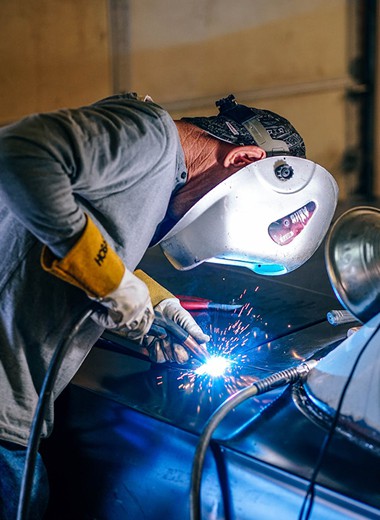
Automotive Industry
The automotive industry took center stage in the Second Industrial Revolution with the creation of the assembly line, but has been a large beneficiary of the advances made by innovations since then, leading to a sharp increase in production in cars worldwide.